

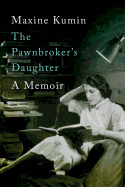
Author of five novels, eight prose collections and 18 books of poetry, including the Pulitzer Prize-winning Up Country, Maxine Kumin (1925-2014) explains how she became a feminist and poet in her short but succinct memoir, The Pawnbroker's Daughter. Her father, a Russian Jew, owned the largest pawnshop in Philadelphia in the 1930s and advertised his business on the free matchbooks given out with the sale of cigarette packs. Her mother was a proud German Jew, embarrassed by her husband's profession, and Kumin learned to tell people her father was a "broker" or "merchant," knowing the word would probably be interpreted as "stockbroker."
While at Radcliffe College during World War II, she met her future husband, Victor, on a blind date; a soldier/scientist, he was sent to Los Alamos to work on the top-secret development of the atomic bomb. Once the war was over, the couple bought a small farm in New Hampshire, and Kumin's poetry career took off. She tells of life on the farm, and shows how its elements worked their way into the many volumes that she produced.
It is through her poetry that her brilliance shines and makes this memoir so worthy. She shows how her childhood and loves influenced her, but her thoughts on being an adult who lived and worked the land and witnessed the good and evil in the world as it unfolded around her are most memorable. Often readers wonder what inspires a poet to write the way she does; readers of The Pawnbroker's Daughter will see firsthand what made Maxine Kumin tick. --Lee E. Cart, freelance writer and book reviewer