

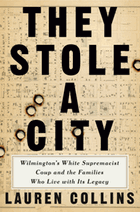
In her sprawling and essential examination of a violent upheaval in 1898 Wilmington, N.C., Lauren Collins (When in French) establishes the thesis of They Stole a City: Wilmington's White Supremacy Coup and the Families Who Live with Its Legacy by explaining that "our understanding of history depends on where we place the parameters of an event." She argues that the events of November 10, 1898, were not singular but one moment on a continuum of race and power in the South, "a centuries-long day that isn't over yet."
Collins traces Wilmington's history through four families--two Black and two white--each with forebears linked to the violence that November. Occasionally unwieldy, the narrative launches these family histories in 1775, offering anecdotes combined with an excavation of historical records to document the rise and fall of Black political and social power in Wilmington. The day itself is granted the smallest share of the book, but the vivid and terrifying details prove it to have been an orchestrated effort to ensure the continuation of white supremacy and to purge Wilmington of its most influential Black citizens, forcing them out of town, out of office, and, in some cases, out of life itself. Throughout, Collins tracks the considerable causes and lingering impact of the coup, dismissing entirely the notion that it was an outlier event brought about by a few bad apples; instead, They Stole a City recounts a long train of progress and destruction, citing the Wilmington of 1898 as "a particularly flagrant case study in the thick American ledger of Black achievement and white backlash." --Sara Beth West, freelance reviewer and librarian