

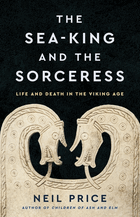
As enjoyable as it may be to chant "RO!" with thousands of helmet-clad Norwegian football supporters at the World Cup, this image is an indication of just how much the term "Viking" has been circumscribed in the public imagination to a monolithic caricature of horned marauders. Neil Price's The Sea-King and the Sorceress, which follows his equally remarkable Children of Ash and Elm, is a formidable corrective, in light of many new discoveries, that reinterprets the "Viking Age" of the mid-eighth century to the mid-11th.
With the precision of an archeologist and the narrative dexterity of a novelist, Price invites readers into a nuanced and rigorous world. Price balances the grand sweep of history with intimate, granular details that make the past feel close. The Sea-King and the Sorceress integrates findings from recent excavations and linguistic analysis, and incorporates Icelandic sagas. Price uses the "sorceress" (völva) and the "sea-king" (sækonungr) as dual lenses to explore the power dynamics--including the holding of enslaved people--gender fluidities, and spiritual anxieties that defined the era. He investigates a people who were outward looking and intellectually restless in a culture that was as concerned with the afterlife and the metaphysical as it was with territorial expansion and profit.
The Sea-King and the Sorceress is a rare achievement, a work that serves as both a primary resource for students of history and a gripping read for the general audience. This is not just a book about Viking raiders and their contemporaries but an essential consideration of how human beings live, die, and are remembered across the vast, icy stretches of time. --Elizabeth DeNoma, executive editor, DeNoma Literary Services, Seattle, Wash.