

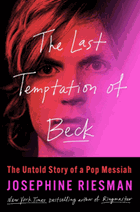
Seasoned culture writer Josephine Riesman probes the wild and weird career of a mononymous musician whose eclectic arrangements and idiosyncratic lyrics flabbergasted the music industry. But The Last Temptation of Beck searches beyond the boundaries of hagiographic nostalgia and instead boldly centers Scientology within the equation of Riesman's savvy analysis.
In January 1994, Beck Hansen lumbered down a dirt road and into American households with the MTV debut of "Loser." The mordant slacker anthem propelled the young countercultural artist to monumental celebrity status. But Beck often evaded discussions about religion and, according to Riesman, many of Beck's early associates were gradually crowded out of his team and replaced by members of the Church of Scientology.
To gauge the shape of her enigmatic subject, Riesman (Ringmaster; True Believer) gathers an impressive array of interview sources that include musician collaborators and firsthand witnesses to significant events. She also wades through available family history, extensive music criticism, and piles of research on the notoriously secretive Church of Scientology, a religion into which Beck was born.
But The Last Temptation of Beck is no hit piece. Riesman's is a portrait of a man in conflict: with his great passion for music, he is vulnerable to exploitation by an institution obsessed with celebrity and capable of fierce intimidation tactics. In a heartfelt coda, the author lays bare her own vulnerability to describe how Beck's image as a svelte counterpoint to conventional masculinity propped open the closet door for her as a transgender woman. And it's this measured yet personal approach that makes Riesman's investigation every bit as complex and intriguing as the pop star himself. --Dave Wheeler, senior editor, Shelf Awareness