

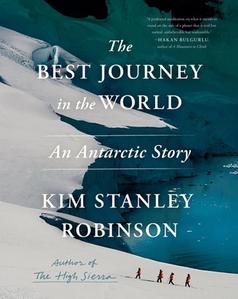
 Hugo, Nebula, and World Fantasy Award-winning science fiction writer Kim Stanley Robinson (The Ministry for the Future) is well known for his Mars trilogy, but even he would attest that the closest human beings might get to experiencing Mars is to encounter Antarctica. The "Continent for Science" is sparsely inhabited by intrepid researchers and, every so often, artists and writers who seek inspiration from that vast, stark landscape. The Best Journey in the World: An Antarctic Story is an expansive work combining historical documentation, narrative nonfiction, autobiography, and classic adventure and nature writing as Robinson interweaves recollections and reflections on his own two trips to Antarctica with the history of human exploration of the continent.
Robinson's first excursion was to do research for his Mars trilogy, but his fascination began with Apsley Cherry-Garrard's The Worst Journey in the World, a memoir of Robert Scott's 1910-1913 expedition to reach the South Pole. Cherry-Garrard's book outlined wish-list destinations for Robinson, and Robinson tried to follow in the steps of the explorers of the Heroic Age--the period where continental exploration was happening by rude means and without technological assistance.
More than a travelogue, The Best Journey in the World encourages readers to consider the planet with new eyes, to fall in love with Earth as it is, to understand the glaciers as not just places of mystery but as places that need protection, and as places where one can most starkly understand human impacts on the climate. Robinson considers the long-term effects of what happens if nothing is done. He reiterates throughout that the continent, which had no monetary value and therefore no importance in the minds of imperial powers in the early 1900s, is now devastatingly important to humanity's collective future.
Robinson's approachable, animated voice is punctuated with archival photographs as well as his personal photographs. He helpfully proffers Antarctica reading lists that include his "essential eight" as well as focused lists across memoir, biography, and history, among other genres. He offers a realistic, if optimistic, view of what must be done now, collectively, to cool the world, save the ice, and stabilize the climate. He urges humankind to work toward global cooperation for a "Good Anthropocene," a version of the world where the scientific cooperation modeled in Antarctica can be mobilized toward real steps to repair the damage humans have done to the climate. --Michelle Anya Anjirbag, freelance reviewer
Shelf Talker: Renowned science fiction author Kim Stanley Robinson takes readers to Antarctica in a sweeping combination of history, narrative nonfiction, and autobiography, arguing for the continent's vital role.