

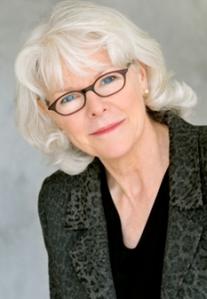
 Barbara Brown Taylor teaches religion at Piedmont College in rural northeast Georgia and is an adjunct professor of spirituality at Columbia Theological Seminary in Decatur. She is the author of 12 books, including the memoirs Leaving Church and An Altar in the World, and is an at-large editor for the Christian Century and occasional commentator on Georgia Public Broadcasting. Taylor lives on a working farm with her husband, Ed, and a wide variety of creatures.
What inspired you to actively explore darkness, the physical kind as well as spiritually and emotionally? What did you learn while researching and writing the book that most surprised you?
What kick-started my curiosity was moving from the city to the countryside, where my relationship with physical darkness began to change. I live on 175 acres at the end of a dirt road nine miles from the nearest town (population 1,500). After dark, there is not an artificial light in sight. For a few months I locked my car doors reflexively, just like my visiting friends from the city did. Then I realized there was no reason to do it anymore. Other changes soon followed: there was also no reason to take a flashlight when I went out at night, no reason to keep the porch lights on after dark, no reason to have a security light. As I learned to allow more darkness into my life, I discovered how much I had been missing. There is a lot of goodness in the dark. I also discovered how inaccurate it is to say, "It's dark outside." If you go outside and check, it's rarely as dark as you think. A single star sheds exquisite light. That was my biggest surprise. But the most significant surprise was finding out that the darkest places in my life--emotional and spiritual, as well as physical--were the places I most needed to go, since that's where all the hidden treasure was.
Given our collective propensity to steer clear of darkness, it might amaze some people that there are, in fact, treasures to be found in the dark. What would you say to encourage those who might hesitate to read a book on the subject of darkness?
Since people have such different personal histories of darkness, some of them quite traumatic, this book is not about getting people to go where they do not want to go. Our fears tell us important things about ourselves, and it is important to respect them. What I did in the book was to explore my own fears, because I wanted to know whether or not the things I had been taught about darkness were true. In my case, they were not. Someone else might come up with a different answer, but nine times out of 10 I think it is important to explore the territory for yourself instead of taking someone else's word for it. Since everyone lives with some kind of darkness, the best reason to read this book is because it may offer you another perspective on your experience of the dark. It may give you a reason to bless the darkness instead of running away from it.
The story of French resistance fighter Jacques Lusseyran, who was blinded as a boy, is extremely compelling, particularly that he learned his condition was a disaster from the people around him. Why did you decide to include his story in the book?
Once I began reading everything I could find with "dark" or "darkness" in the title, I fell in love with so many authors--not just Jacques Lusseyran but also Robert Louis Stevenson, Chet Raymo, Barbara Hurd and Gerald May. They came at darkness from so many angles that I knew I could not write the book without their help. Every chapter leans on one of them. Lusseyran's angle was physical blindness, and his writing was so luminous that I could not figure out why I had never heard of him before. He writes like an angel, like a mystic. His response to losing his sight at an early age is so surprising that it will change the way anyone thinks about blindness. You end up almost envying him.
Darkness affects each of us on a personal level, but what are the costs of too much light on a larger scale such as culturally and environmentally? Have you found that it surprises people to learn this?
It certainly surprised me. Before I researched this book, I thought of artificial light as benign--a relatively cheap way to extend the hours of the day so we could all get more done. Once I learned more about the biological, ecological and social costs of artificial lighting, my view of everything from table lamps to street lights changed pretty dramatically. I have become a bit of a nag about light bulbs, I am afraid, but for what I hope are good reasons. Those of us who are addicted to light are paying a high price for our fear of the dark.
In what ways does this book complement your previous two memoirs, Leaving Church and An Altar in the World?
All three books test the premise that life can be organized into opposing pairs. I grew up thinking that the church was the opposite of the world, the spirit was the opposite of the flesh and the divine was the opposite of the dark. The list of opposites was a lot longer than that, but the basic idea was to stay on the "good" side and stay away from the "bad" side. Eventually I suspected that if I did this then I would end up living half a life, so I began to test what I had been taught. In many ways, all three books are about scooping up the bottom halves of things--first the world, then the flesh and now the dark--in the interest of living a whole life instead of half of one.
What would you like readers to take away from Learning to Walk in the Dark?
That's easy. I would like them to take away some new reverence for their own experience of darkness, as the place where they are most deeply vulnerable to the presence of the Divine. As a bonus, they may also see more shooting stars. --Shannon McKenna Schmidt