

 |
|
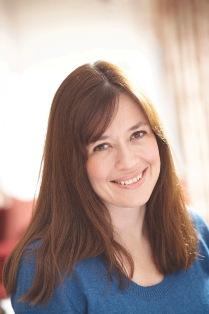
| photo: Mike Hogan | |
Daisy Goodwin, a Harkness scholar who attended Columbia University's film school after earning a degree in history at Cambridge University, is a leading television producer in the United Kingdom. She is also a book reviewer for the London Times and was chair of the judging panel for the 2010 Orange Prize for Fiction. The Fortune Hunter is Goodwin's second novel, following the New York Times bestseller The American Heiress.
What was your inspiration for writing The Fortune Hunter? How did a jigsaw puzzle play a part?
I have been fascinated by the Empress Elizabeth of Austria, or Sisi as she was known to her family, ever since I was a little girl. I was given a jigsaw puzzle of the famous Winterhalter portrait of the Empress wearing a spangled ball gown and diamond stars in her hair when I was recovering from an operation, and I remember spending hours trying to fit her together. Someone knocked the puzzle over when I was halfway through and some of the pieces were lost so I never managed to finish it but, as so often in life, it is the unfinished images that linger in the memory.
Years later I visited Vienna, and I went to the Hofburg Palace and saw the original picture that my puzzle was based on. I started to research Sisi's life, and I was astonished at what a contemporary figure she seemed. Her worries over her weight, her fading beauty and her quest to find meaning in a life of unlooked-for celebrity all seemed to me to be very contemporary issues. When I discovered that Sisi came to England and had had a relationship with the splendidly named Captain Bay Middleton, I realised that my next novel was taking shape. Although it takes some liberties with the chronology of Sisi's visits to England, all the characters in it are based on real people. I love trying to create living, breathing people out of the names you read in history books.
The title character is Bay Middleton, the man at the center of a love triangle. When did he first come to your attention? What can you tell us about him, both the fictional version and the real-life figure?
I started researching The Fortune Hunter around the time of the royal wedding, so obviously anyone with the name Middleton leapt out at me. And Bay is such a glamorous nickname. I think I fell in love with his name first and the rest followed. When I started to research his life, I found that he was a famous ladies' man. Before his liaison with Sisi, he was having an affair with Blanche Hozier, a married society lady. It is quite likely that Clementine, her daughter, was actually Bay's child. Clementine Hozier, of course, went on to marry Winston Churchill. Bay was the greatest horseman of his generation, and he was just as famous in hunting circles as Sisi was in Vienna. I recently met his great-great-granddaughter, who is a well-known TV presenter in the U.K., and discovered that she has called her younger son Bay.
The real-life Bay was probably slightly less handsome than the fictional one, and there were some reports that he might have been slightly deaf. But I suspect that he was one of those men who feigned deafness when he found people boring. In real life and on the page, his two interests are horses and women. In real life, his relationship with Sisi went on for at least five years. But although they stopped hunting together, I suspect that Bay never got over Sisi entirely. When he died in a hunting accident in 1892, the medallion that she gave him at their last meeting was found in his pocket. The reality of his life came home to me when I visited his grave in a small churchyard in Leicestershire. There was a beautiful stone Celtic cross with his name BAY across the central strut. But the really touching thing was that someone had laid fresh flowers at the base. I think it must have been a woman. Even a hundred odd years after his death, Bay Middleton still has his female admirers.
Much less is known about Charlotte's life than about Sisi's. Which character was more challenging to create? Did you empathize with one woman more than the other?
There have been numerous biographies of Sisi (the best is The Reluctant Empress by Brigitte Hamann), but Charlotte Baird's life is pretty much unrecorded. So when I write about Sisi I am fleshing out what I have read about her, even if I do give her my own spin. With Charlotte, I really had a blank slate so I tried to come up with a character who would have nothing in common with Sisi, except of course her interest in Bay. I had enormous fun getting inside Charlotte's head. She pretty much wrote herself from the very first sentence. As she says to Bay, she is the sort of woman who notices things. The other thing I love about Charlotte is her irreverence. I suppose because she is an orphan, the worst things in life have already happened to her, so she has no fear. But I also have some sympathy for Sisi. It must be hard to be continually surrounded by people who fawn on you to your face but are poisonous behind your back. Sisi is closer to me in age and, I suppose, I have given her some of my own concerns about getting older and losing appeal, although I am not quite in her league.
Why did you decide to give Charlotte an interest in photography?
I have always been fascinated by the impact the advent of photography must have had on people's perceptions of themselves. To see yourself as others see you, for the first time, must have been a revelation in the 1860s and '70s. Today photography is commonplace, but then it must have changed the way people thought about everything. Imagine being able to see a photograph of a desert or a glacier. It must have been an extraordinary moment. Some of the most interesting photographers at that time were women. I have based Charlotte's godmother on a real-life female photographer called Lady Hawarden. I wanted Charlotte to have a lens, literally, through which to see the world. The things that photographs reveal is a theme in the book. It also ties the two women in the book together. Sisi was so worried about unflattering photographs that she carried a leather fan with her wherever she went to shield herself from Victorian paparazzi--the 19th-century equivalent of a baseball cap and sunglasses.
How did you go about researching different aspects of The Fortune Hunter, such as the time period, the settings and the details on hunting? Did you visit Windsor Castle, where Sisi and Bay have a tête-à-tête with Queen Victoria in the story?
History was always my favorite subject at school so the research for this book was an absolute pleasure. I spent hours in libraries reading about Victorian racetracks and visiting obscure museums which have authentic ladies' side saddles. I did go riding quite a lot when I was writing the book just to remind myself what it is like to go really fast across open country, but I was too scared to gallop. Fox hunting is a really extreme sport. I have been on a day trip to Windsor Castle, but I read a great deal about what it must have looked like in the 1870s.
In addition to The Fortune Hunter, you're the author of The American Heiress, which takes place in the late 19th century. What draws you to writing historical fiction?
I like the challenge of making the past come alive. I grew up reading the great 19th-century novels so when I started to write it felt natural to set the books in the Victorian era. I would like one day to write a novel set in the present, but as my next book is set in Queen Victoria's court that isn't going to happen just yet. --Shannon McKenna Schmidt