

 |
|
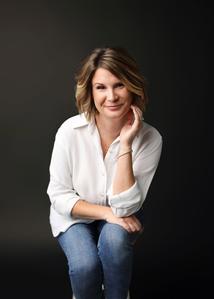
| Meg Anderson (photo: Amanda Hakes/Betty+Bobby Photography) |
|
Meg Anderson resides in Indiana with her husband, three children and four very opinionated cats. She lives with multiple sclerosis, a part of her life but never the whole story. Writing has always been her outlet, and somewhere along the way, she discovered that putting words on the page helped her make sense of the world around her, sparking her love for writing stories. In her debut novel, The Memory of Borrowed Books, a Massachusetts librarian discovers a magical archive in the basement of her historic library building, which is threatened with imminent closure. The trove of memories she finds there helps her understand herself and her customers, including one particular patron and love interest, Julian. This "love letter to libraries" will be published by Sourcebooks Landmark on October 6, 2026.
What libraries have shaped you?
The library that shaped me most was my high school library. I was the girl who skipped the cafeteria and ate lunch between the shelves because it was the one place I truly felt seen. I learned early on that books and the places that hold them can feel like home, and that sense of comfort and belonging stayed with me long after I graduated. And, in many ways, that's what inspired The Memory of Borrowed Books. I wanted to write a story that honored that same magic libraries hold for people who need them most.
Now, I get to watch my own three children fall in love with stories inside our own small-town library, and I think there's something incredibly special about seeing that same sense of wonder passed on to them.
What are some other beloved places you had in mind when you were building the world of Foxhollow Bay?
One of my favorite things to do whenever my husband, three children and I travel is to look up the nearest library. Over the years, I've fallen in love with the way so many of them sit at the heart of their small towns, and through visiting all different kinds of libraries, I really found myself drawn to places that felt layered with history and memory, which also became such an important part of building Foxhollow Bay.
I loved the idea that Foxhollow Library was once the home of the town's founder centuries earlier, because so much of this story explores the way places hold onto people, carrying traces of both what's been lost and what still remains. I also think that's part of what makes certain places feel almost alive to us: their walls still remember the stories that came before.
Although Grace has heard rumors about a hidden room in the library, Claire seems to be the only one who can see it. Then when Julian gets hold of one of the magical books, he also journeys into its story. How did you decide on the "rules" for this archive?
I always intended for the hidden room to mirror the way our own minds work through compartmentalization and the spaces we create for the memories we try to protect ourselves from, ultimately burying or avoiding them altogether. That idea naturally led to the room only revealing itself when someone is truly ready to confront what they've been carrying, which is also why Julian is eventually able to access the books as well. And in a larger sense, the magical books then become emotional truths that characters have spent so long trying to outrun, finally forcing them to face the parts of themselves they've hidden away. But at its core, the hidden room was never really about magic alone, it was always more about what happens when we finally allow ourselves to remember.
The novel expounds on the idea that the truth only finds you when you're ready for it. What are some truths that you resisted or weren't ready for in your life, until finally you were?
I think one of the hardest truths I learned, especially while writing both Claire and Julian's stories, was that healing isn't always linear. Much like the memories hidden inside some of those books, there were once parts of my MS diagnosis that I wanted to lock away and never revisit again. But through writing this story, I found myself beginning to work through many of my own fears and uncertainties. It really taught me that while some grief never fully disappears, time does have a way of making it a little less heavy to hold.
All over the world, libraries face the threats of budget cuts, censorship, and closure. Does Foxhollow Bay offer a model for how to resist?
Claire learns that saving a library is never a task that can be done alone. She finds her voice through the people around her and realizes just how much the library matters not only to her, but to the entire town.
More than anything, I wrote this story for libraries and librarians everywhere. They are the backbone of the communities they serve, fighting every day to protect access to stories and the connection they provide. I hope this book reminds people to never underestimate the power of using their voice, even when it feels like no one is listening, because stories have always had the ability to move people, and when communities come together to protect the places they love, real change really can happen.
What would be Claire's ideal book-and-snack combination on a sleepless night?
Claire would absolutely reach for a well-loved classic like The Secret Garden on a sleepless night. It's one of the books she says once held her together when nothing else could. Alongside it, she'd most likely choose her longtime ritual of warm milk, a deep breath, and then back to bed, just like her mother used to tell her when she was little.
Are you working on another book? What can readers look forward to in the next one?
I am! My next novel still lives within that same magical, bookish world, but this time we're downsizing to Little Free Libraries. As much as I love libraries, I also have such a soft spot for those tiny ones, too.
This story explores identity and the paths we take in life--the ones we choose and the ones we leave behind. It looks at how we can love the life we have while still grieving the one we once imagined for ourselves. It's about realizing that it's never too late to reclaim that version of yourself you thought you lost. I cannot wait for readers to step into these pages and meet these characters. --Rebecca Foster