

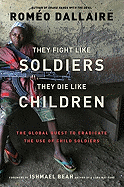
Roméo Dallaire (Shake Hands with the Devil: The Failure of Humanity in Rwanda) led the international peacekeeping mission in Rwanda after the Arusha Peace Agreement was brokered to end civil war in 1993. "I was given strict orders from the highest commanders of the UN not to act, merely to observe," he writes about his assignment. As a career Canadian Armed Forces officer, Dallaire knew about chain of command and obeying orders. When confronted with the massacre of Tutsis and Hutus in April 1994, however, he disobeyed his orders and saved the lives of some 30,000 people. He knew the order not to act was immoral in this case; 800,000 people died in that genocide as others stood by. From that experience, a new, extremely challenging journey began for him.
The horrors of Rwanda expanded in Dallaire's mind far beyond those statistics of slaughter as he considered that children had been used as soldiers in the civil war and the genocide. Attempts to reconcile his sense of childhood with the hate and violence he saw in the eyes and actions of those children led him to ask questions he felt others were avoiding about creating, using, disarming and reintegrating child soldiers. Wrestling with those questions has obsessed him for 15 years. His findings are as important and morally central to our age as they are profoundly disturbing. In Dallaire's tough, pragmatic language, children as soldiers "have military capabilities, net operational advantage and tactical effectiveness" that make them attractive to adults commanding operations. And he makes clear that we need to "understand how they operate as a weapon system... so that we can successfully neutralize their effect."
Dallaire has discovered that discussing children in terms of being a "weapons platform" can itself lead to a complete shut down of dialogues about eliminating the use of children as soldiers. To counter such sensitivities and to build bridges to keep all parties working for effective solutions, he has spearheaded the Child Soldiers Initiative; the daunting task and the progress made so far are awe-inspiring.--John McFarland