

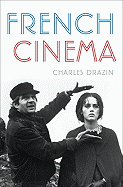
If you get up for a refrigerator break when they hand out the Academy Award for Best Foreign Film, this book is not for you. French Cinema by Charles Drazin (In Search of the Third Man), arguing that French films are usually better than American ones, is for the true believer, she or he who says "oeuvre" as easily as "Godard."
The book is not a general introduction to French cinema, but a carefully researched and detailed argument that, in essence, defends the "art" of French movies against the crass commercialism of Hollywood (read: American) films. Drazin begins with the birth of film in France, with Georges Méliès and the Lumière brothers, and argues that ever since, the history of French cinema has been a distinguished one, while the history of American film has been about the search for huge audiences and revenue. While the French film exudes a "timeless" quality, the Hollywood blockbuster reeks of the "ephemeral."
Along the way, Drazin provides exceptional insights and pithy summaries about successful French directors (Duvivier, Renoir) who went to America only to find their artistic voices stifled; a fascinating analysis of how the famous Cahiers du Cinéma crowd elevated French cinema as "art" as it denigrated American film as "popular"; and gives interesting social and political reasons why a few French films (Amélie, A Man and a Woman) found success in American markets.
Drazin gets a bit too snobby at times, but his critiques are perceptive. French Cinema will be enjoyed by informed cinéastes who love to debate the nuances between "good" and "bad" movies. --Tom Lavoie