

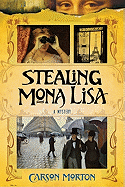
Carson Morton's first novel employs a delightfully murky moral standpoint. The protagonist is Eduardo, the Marquis de Valfierno, who heads up a gang of clever con men in Argentina in the early 1900s. Taking advantage of the shameful lack of security in the National Museum, Valfierno has concocted a brilliantly simple plot to swindle American businessmen. He offers to sell them paintings stolen from the museum, but delivers masterful forgeries instead. Not the noblest line of work, but once we meet the newest client, railroad tycoon Joshua Hart, it's clear that swindling is exactly what he deserves.
When a change of circumstances, and perhaps a lingering affection for Hart's beautiful young wife, land Valfierno in Paris, he plans his most ambitious project yet: the theft of the Mona Lisa. With Hart and the French police pursuing him, the action culminates in a chase through the streets of Paris, as the waters of the Seine spill over their banks and flood the city.
Morton bases his work on a myth surrounding the actual theft of the Mona Lisa in 1911. Many years after the painting was recovered, an article appeared in the Saturday Evening Post describing the author's meeting with a man named de Valfierno, who claimed to have commissioned the theft in order to pass off several forgeries as the real thing. Despite being completely unsubstantiated, the story has persisted throughout the years and, in Morton's capable hands, has been crafted into an engaging and atmospheric novel. With richly drawn characters and careful pacing, Stealing Mona Lisa is a work of art in its own right. --Judie Evans, librarian