

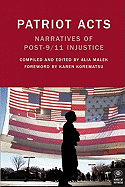
Patriot Acts might make your stomach hurt. While nausea isn't normally a book-review highlight, in this case such a visceral response should be counted as a measure of the book’s success. The editor, Alia Malek, is the American-born child of Syrian immigrants and author of A Country Called Amreeka: US History Retold Through Arab American Lives. Her stated goal in Patriot Acts is to give a voice to people whose human rights were violated after 9/11.
The heart of the book is 18 first-hand accounts of what Malek calls "the darker side of the War on Terror." Members of America's Arab, Middle-Eastern, Muslim and South Asian communities, the narrators differ in age, ethnicity, gender and, unexpectedly, religion. Some stories are horribly disturbing: a 16-year-old Muslim girl from West Africa held on suspicion of being a suicide bomber, a young Sikh who lost two brothers to hate crimes. Others are black comedy, like the student detained by TSA because of Arabic-language flashcards and a Lebanese great-grandfather.
What holds these narratives together is the question raised by Sikh business owner Rana Sodhi, whose brother was shot to death because he wore a turban and "looked like the enemy": "How many times can a person be stopped before they feel like they are not seen as American? What does an American look like?" Published 10 years after the September 11 attacks, Patriot Acts is a powerful reminder of the importance--and fragility--of America's civil liberties. --Pamela Toler, blogging at History in the Margins