

"Where were you, Mama, when all those horrible things were taking place in your city?"
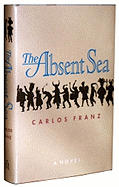
This accusation from her daughter plunges Laura, the heroine of Carlos Franz's English-language debut, set in post-Pinochet Chile, into an abyss haunted by terror and shame. The provincial shrine city of Pampa Hundida is panic-struck when Laura, a former magistrate, returns to the post she fled two decades ago. How will she judge the townspeople who bore witness to atrocities committed in the wake of the military coup that ousted Allende and drove her into exile?
The Absent Sea is not easy to read but it's important to do so. A dark and complex psychological novel along the lines of Dostoyevsky, it dissects dichotomies between past and present, logic and desire, good and evil. Laura is not likable at first; she doesn't even like herself, having cowered in Germany for 20 years rather than remember. And when she allows her memories to return, her recollections, labyrinthian and laced with recurring mantras, are trance inducing. But if Franz's language sometimes sounds overwrought in translation, it also has moments of subtle beauty.
A victim of torture and rape, Laura reserves her harshest judgments for herself. "She sat down when she should have remained standing"--she was complicit. But through her efforts to close the growing gap between herself and her daughter, Laura comes to recognize shades of gray and that the burden of history, both the innocence and the guilt, is shared by all of us. --Tom Lavoie, former publisher