

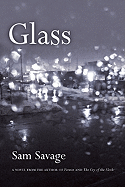
Glass is a novel less concerned with linear plotting and development than presenting a psychological portrait of Edna, an elderly woman typing compulsively in her decaying apartment. The clatter of her keys taps underneath every word of the book--pages and pages about her lonely childhood, her unhappy marriage, the empty misery of her day-to-day.
"I used to think the mute incoherent daily suffering of ordinary life was too big for words," she types. "Now I think the words are too big for it. There are no words trivial enough to say how terrible it is."
A sense of looming death hangs over every sentence and in every corner of her dingy home. Edna does her typing behind dirty windows, surrounded by the wilting plants and sick rat a neighbor has left in her reluctant care. She reveals her history in fragments that slowly fit to form the bleak picture of her present.
Edna is a tragic character, though not a particularly sympathetic one; she is pathologically reclusive, snobbish, possibly of questionable moral character. But she is a true writer, and Savage devotes much of Edna's typing--it is always just "typing"--to careful examinations of phrases, astute observations and literary references. She often writes about the word choices she would make "if this were a story."
But, of course, it is a story--one riddled with uncertain memories, strange qualifications and alarming omissions. By its abrupt end, the only thing made clear is that Edna's side of it may not be the right side at all. --Hannah Calkins, Unpunished Vice