

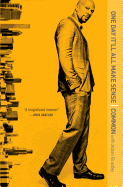
In May, hip-hop artist Common was invited to perform at the White House as part of an event celebrating young people and poetry. Outraged critics--Sean Hannity and Sarah Palin among them--responded by amplifying and misconstruing out-of-context lyrics, labeling Common a "vile rapper" and decrying the Obamas' association with him.
Anyone familiar with Common's work recognizes these claims for what they are. A self-styled "conscious artist," Common promotes a message of peace and social justice. In One Day It'll All Make Sense, he explains how that message developed, and how Lonnie Rashid Lynn became rapper, actor and activist Common.
One Day is more autobiography than memoir, beginning with his childhood on Chicago's South Side and closing with his account of the recent controversy. In between, we learn about his personal renewals, transformative relationships and ethos as an artist. He writes of faith, love, fame and fatherhood, all rooted in his relationship with his mother, Mahalia, who made significant contributions to the book.
Each chapter begins with an intimate letter to an important influence in his life--Mahalia, his daughter, close friends and ex-girlfriends, and even to hip-hop itself: "You are here to provide a voice for the voiceless, hope for the hopeless, life for the lifeless, love for us all," he writes.
Fans of Common will gain the most from One Day, but anyone interested in the history of hip-hop or in contemporary black icons will find something to appreciate here, as the book is chock-full of stories of his encounters with everyone from Tupac and Biggie to Nelson Mandela and Maya Angelou. --Hannah Calkins, Unpunished Vice