

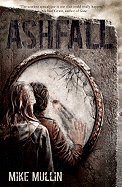
The fight for survival in a dystopian world has rarely felt as real as it does in Ashfall.
Novels in this genre often rely on a nonspecific catastrophe in the distant past to explain an autocratic government or violent culture. Not this one. Ashfall is based as much on science as it is on fiction. Supervolcanoes have erupted before and could erupt again, making the bleak landscape portrayed in the novel an all-too-realistic possibility--even the idea of an eruption in Yellowstone reaching Cedar Falls, Iowa.
Separated from his family, 15-year-old Alex strikes out on his own in the harsh volcanic winter that follows the eruption. As he learns to survive in a world covered with more than a foot of ash, Alex finds that the disaster has changed more than the landscape. With no electricity or running water, local governments are helpless to feed or house survivors. Vehicles get choked with ash and can't function. People become desperate. And violent.
By the time Alex meets Darla, he is practically dead. Lucky for him, Darla isn't a simpering female. She can butcher an animal, tan its hide, stitch up wounds and replace a carburetor. As they work together to find Alex's family, their tentative friendship grows, eventually becoming much more.
Mike Mullin has crafted an amazing debut with strong lead characters and a page-turning narrative. While the gritty realism might convince some readers to take their scouting classes more seriously, the overriding sense of hope will make them eager to read the next book in the trilogy. --Sherrie Petersen, children's book reviewer and blogger