

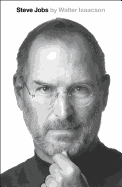
It wasn't just his family Jobs was concerned about; he knew people would be writing about him and his legacy at Apple, and he wanted to make sure his version of events was out there. Yet while Steve Jobs acknowledges its subject was "the greatest business executive of our era," it's far from a straightforward tribute. Isaacson has interviewed people who knew Jobs at every stage of his career, and--well, anyone who's kept an eye on the computer industry already knows he was a volatile leader whose passion for excellence could all too easily flip into abusiveness towards anything he saw as less than excellent. (His stubborn refusal to accept anything but the best persisted even as he clung to life after a difficult transplant surgery, when he tore off an oxygen mask because it was badly designed.) Over the last decade, though, Jobs became--after Bill Gates--the other computer industry executive recognized by people who didn't follow the computer industry, and for those readers Isaacson's revelations about the turmoil of Apple's early years and the detours to NeXT and Pixar before his triumphant return will be even more eye-opening. (The chapter on his working relationship with designer Jony Ive is particularly insanely great.)
Readers who think they knew what Jobs was like, however, still have much to discover. Some of the most engaging passages in Steve Jobs are those in which Isaacson directly engages his subject: "What's on Steve's iPod?" is one example, but there's also the opportunity to wander the streets of Silicon Valley, visiting Jobs's childhood touchstones--or, less idyllically, to push him on the question of whether he really stiffed Steve Wozniak, the co-founder of Apple, on the bonus for a project they did at Atari in 1975, and then to double-check the story with Wozniak and Atari's Nolan Bushnell. Scenes like these, scattered throughout the biography, remind us that Jobs was not just a cultural icon, but a complicated man whose radical transformation of the world came with a profound emotional cost. --Ron Hogan, founder of Beatrice.com