

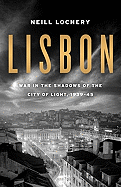
During World War II, António de Oliveira Salazar had one overriding goal as Portugal's dictator: to maintain the neutrality of his small, poor, vulnerable nation. The deals, the compromises and the consequences come into clear view in Neill Lochery's lively, accessible and hair-raising history of a time and place that many have chosen to forget in order to save face.
Portugal was geopolitically well positioned to maintain its neutrality at the same time it did business with both sides: Germany wanted to continue buying supplies of wolfram (tungsten), and the Allies were counting on obtaining use of the Portuguese-controlled Azores for their sea and air purposes. Lisbon, located at the western edge of continental Europe, also was a stop for refugees fleeing the Nazis. All these factors made Lisbon, formerly sleepy and neglected, a hotbed of international intrigue as soon as the war began.
The tides of refugees that flowed through Lisbon have long captured most of the coverage from that period and included celebrities like Peggy Guggenheim, Max Ernst and Arthur Koestler--and even the Duke and Duchess of Windsor, who got special treatment. But Lisbon was also the scene of desperation as many Jewish refugees waited for exit papers to get them out of Europe. The sheer numbers of international travelers and the knowledge they might be carrying created work for the Portuguese secret police and a new local business: spying. "At times, it appeared that almost everyone in Lisbon was either a spy or pretending to be one," Lochery writes. The real money, however, was in the wolfram trade with Germany. Salazar's eventual demand that Germany pay for the wolfram in gold led to a network to camouflage the flow of payments that has soiled all involved (including Switzerland, Brazil and even the Shrine of Our Lady of Fatima). Nobody, it seems, escaped the taint of conducting business as usual in such times under the guise of neutrality. --John McFarland, author