

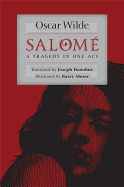
During an 1891 sojourn in Paris, Oscar Wilde was inspired by discussions with Stéphane Mallarmé and other Symbolist poets to take a biblical tale, set it as drama and write it in French, not English. Wilde was drawn to tales of decadence and beauty, and he couldn't do better than Salomé, teenage princess of Judea who became obsessed with John the Baptist, prisoner of her stepfather, Herod, and demanded John's head on a platter in exchange for performing the Dance of the Seven Veils. Wilde had a ball piling on out-of-control lust, family dysfunction, artsy striptease, beheading and necrophilia for maximum theatrical effect. He did so in highly stylized language that Joseph Donohue argues makes the drama in French one of "the greatest prose poems of them all."
While the play met with success at its French premiere, Wilde was less well served by the Lord Alfred Douglas English translation that has dominated discussion of English versions, to the detriment of the worth of the piece. Donohue provides a fascinating essay on Wilde's serious errors of judgment on that score; readers will take away lessons from Wilde's mistakes, including not hiring your boyfriend for a job for which he has no experience and not commissioning Aubrey Beardsley to illustrate a tale that happens somewhere other than an opium den.
Donohue renders Wilde's French tragedy in "an up-to-date, colloquial yet spare English translation" that could be performed on stage today. It reads smoothly, and he's breathed life back into the play. The ominous Barry Moser engravings also establish the time and place, mercifully free of a single Beardsley peacock feather. --John McFarland, author