

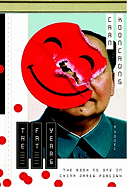
In scenes befitting the bleakness of Huxley's Brave New World, Chan Koonchung's The Fat Years imagines a China not so far in the future where a majority of the population, as Julia Lovell writes in her introduction to the novel, is "happy enough with a status quo that has delivered economic choice without political liberties." The title refers to that self-congratulatory state, perpetrated and perpetuated by a repressive regime intent on projecting an image of prosperous dominance after the massive collapse of the global economy.
The Fat Years opens in the "Golden Era of Ascendancy," as the wandering, monkish Fang Laodi laments a memory gap of 28 days that seems to afflict most of his countrymen, including Lao Chen, a Taiwanese expatriate writer. Lao Chen fails to pay attention or understand the significance of Fang Laodi's ramblings until a chance encounter at a literary reading with his friend, anti-government conspirator Little Xi, draws him into the intrigue and mystery surrounding the lost month. Lao Chen imagines a happy ending with Little Xi, but her disappearance stirs him from blissful slumber and forces him to confront the truth behind the Communist Party's subterfuge and its subsequent attempts to maintain its unbending influence over the people, thereby rewriting history.
That such fiction could conceivably become reality makes The Fat Years chilling and bluntly effective in revealing the philosophical implications of Asian Calvinism and nationalistic worship, thanks to the Communist government’s totalitarian hegemony. With this work, Chan Koonchung presents us with an unignorable perspective on the state of affairs in the world's most populous nation. --Nancy Powell, freelance writer