

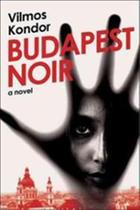
Zsigmond Gordon spent some time at a newspaper in Philadelphia before returning to his native Budapest to become the crime reporter at Evening. In 1936, as politicians kiss up to Fascists by changing the names of local landmarks to things like "Adolf Hitler Square" and censoring the papers, Gordon thinks to himself, "I write the news if, that is, the news lets itself be written." A colleague tells him to lighten up: crime in Budapest is a farce perpetrated by petty bumbling freaks--and, anyway, it's nothing like the grit of Philadelphia. Still, Gordon becomes obsessed with discovering the truth about the murder of a beautiful Jewish woman after seeing the crime scene, in an area frequented by street prostitutes. He establishes the who, what, when and where quickly, but is troubled when why does not come into focus. Throughout his investigation, he encounters resistance from his girlfriend, his editor, the police and, most damagingly, a violent hit squad, but everyone's entreaties only inflame his reportorial zeal.
Vilmos Konder beautifully depicts the atmosphere of pre-World War II Budapest, with its corrupt politicians, Communist cells and hustling criminals, and recounts Gordon's steps with GPS-level precision: "On Berlin Square he transferred to another [tram] to Calvin Square," runs one typical passage. "He walked along Kecskeméti Street, turning onto Bástya, and was already in the Guinea Fowl a couple of minutes before noon." Time-traveling visitors would have no fear of wandering down the wrong street with Budapest Noir under their belts. --John McFarland, author