

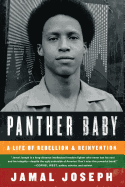
A cocked beret over a tight Afro, a leather gloved fist held high, an M16 strapped across his back, Malcolm's or Mao's book in his back pocket and, oh, those cool shades... the Black Panther was the white man's nightmare for the 1960s. Eddie Joseph became one when he was 15, living in a Harlem apartment "surrounded by chicken bones, a wounded TV, and a poster of Che." In Panther Baby, he tells the story of how a light-skinned son of Cuban revolutionaries was handed off by his unwed black Latina mother to an older black couple who raised him in a North Bronx home equally comfortable with Marcus Garvey, W.E.B. Du Bois and their local Baptist church. Joseph seemingly was born to fight.
In relatively short order, the 15-year-old, now renamed Jamal, set off on the rocky road of activism, crime, prison, drugs, politics and, finally, theater and the arts, to his present status as a family man, Oscar nominee and Columbia film school chair. Panther Baby dramatically marks the milestones of this journey. All the early Panther heavyweights are here--Huey, Rap, Stokely--as well as Joseph's childhood friends and, eventually, his godson Tupac, whom he tried to counsel and encourage in his last days.
As a former Black Liberation Army soldier intent on bringing "sixteen million armed black people... to disrupt the capitalist system," Joseph wisely concludes his autobiography on the steps of Columbia's Low Library with the words: "Maybe there's a future after all." --Bruce Jacobs, founding partner, Watermark Books & Cafe, Wichita, Kan.