

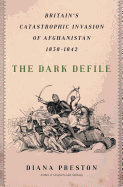
In The Dark Defile, Diana Preston tells the story of Great Britain's ill-fated attempt to conquer Afghanistan in the early years of Queen Victoria's reign, handling the inevitable parallels between the 19th-century British experience and modern events with a light touch and solid historical research.
Concerned about Russian expansion into Central Asia, the British government sent the Army of the Indus into Afghanistan in 1838 with orders to overthrow the existing ruler and replace him with a British puppet. The expedition ended with the slaughter of the British forces as they retreated from Kabul.
Reading The Dark Defile is like watching an impending train wreck in an old movie: you are at turns horrified and fascinated, all the while hoping for a last-minute save that never comes. Preston uses diaries, letters and official accounts by both major and minor figures to illustrate the series of personal, political and military errors of the First Afghan War. While politicians in London suppressed reports in which the British representative in Kabul argued against the political coup, an elderly general was given command of the expeditionary force because it was thought the climate of Kabul would be good for his health. Soldiers were housed in indefensible cantonments; subsidies to Afghani tribal leaders were cut. And when Afghan forces rebelled, British leaders hesitated to send out the troops. In the end, only one member of the expedition survived.
The Dark Defile is more than just an account of Britain's "Great Game" in Central Asia gone wrong. Preston ends with a critical assessment of Britain's "conspiracy of optimism" in Afghanistan, and its impact on future relationships between Afghanistan and the West. --Pamela Toler, blogging at History in the Margins