

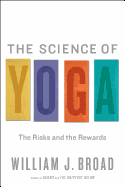
The Science of Yoga exemplifies why William J. Broad has won so many major awards, including two Pulitzers, during his career as a science journalist. In "an impartial evaluation of an important social phenomenon that began five thousand years ago," he examines the discipline of yoga from every imaginable angle--health, science, spirituality, sexuality, medicine, business and trend--in loosely chronological order, touching upon all the key events and figures in its history, as well as its significant variations.
Broad has practiced yoga since 1970, and believes it "could become a force in addressing the global crisis in health care" because "[it] can turn our bodies into customized pharmaceutical plants that churn out tailored hormones and nerve impulses that heal, cure, raise moods, lower cholesterol, induce sleep, and do a million other things." He reports on the current scientific research into yoga's ability to treat depression, arthritis, insomnia, diabetes, fatigue, depressed libido and chronic pain.
In the meantime, however, yoga must address the inherent dangers in remaining an unregulated industry, which is why Broad hopes to establish a Yoga Education Society; this book is a step toward that goal. His writing is accessible and engaging, and he does not shy away from discussing the more controversial aspects of yoga along with the tremendous health benefits. (An advance excerpt in the New York Times Sunday Magazine focused on the physical dangers of overexerting oneself on the yoga mat, especially through poor guidance.) The Science of Yoga is a fascinating study of yoga's past popularity and future potential. --Kristen Galles from Book Club Classics