

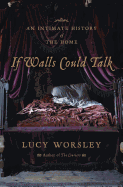
Historian Lucy Worsley (The Courtiers) takes readers on a tour of the innermost sanctions of the English home, exploring "what people actually did in bed, in the bath, at the table and at the stove." If Walls Could Talk reveals how separate rooms evolved from the semi-communal homes of medieval times, where people "simply had a living space in which they happened to rest--or eat, or read, or party--and they used the same room for everything." History buffs and those intrigued with quirky and trivial details will learn how commoners and kings performed all the natural functions of the body. For example, Henry VIII's bath water traveled three miles before reaching his round wooden tub, and his close stool, "a padded, seat-less chair placed over a pewter or ceramic chamber pot," was "stuffed with swansdown, covered with velvet and decorated with gilt nails and fringes."
From messy and prolonged Tudor births and breastfeeding to the Victorian wife whose "cares were to be kept to herself rather than shared with her busy, important, money-earning husband," Worlsey discusses advancements made in all the domestic arenas. Leading readers through the centuries, room by room, she describes the advent of special sitting-room furniture, the accumulation of "stuff" to show off one's wealth and education levels and how "the kitchen has been the scene of vicious class and gender battles." Overflowing with specifics, If Walls Could Talk is a fly's perspective on the messy nuances of life in an English home. --Lee E. Cart, freelance writer and book reviewer