

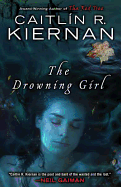
Caitlin R. Kiernan's The Drowning Girl works on many levels. It is simultaneously an old-fashioned New England ghost story and a study in madness and the fluidity of identity when madness descends. India Phelps (nicknamed Imp), a girl whose family tree need be shaken only lightly to encounter crazy ancestors, is dealing with the onslaught of schizophrenia herself, making her a perfect example of the unreliable narrator. Imp is an artist and keen student of art history, threads that will be essential to Kiernan's (Silk; Daughter of Hounds) plot.
Imp has several encounters with what could be ghostly apparitions--or manifestations of her own growing madness. Kiernan excels throughout at developing the atmosphere and ambiguity, veiling events with just enough mist to keep the reader (and Imp) guessing at what's going on. In the midst of the darkening mood, Kiernan works in some great asides about feminism, gender and sexual identity. Imp is a lesbian with a transsexual girlfriend; the outsider motifs elaborated through these characters add a depth to the novel. Kiernan also makes wise use of fairy tales throughout, with Little Red Riding Hood being of particular, chilling importance. While Imp loses her hold on reality, Kiernan never loses control of the narrative and her use of language expertly mirrors Imp's wounded psyche. The Drowning Girl is a fine novel that is also a study of art and the fragility of the sense of self, haunting in the deepest sense. --Donald Powell, freelance writer