

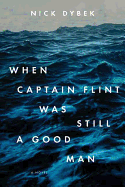
Many of us have grown up riveted by images of the pirates of Robert Louis Stevenson's Treasure Island, from Long John Silver to the cutthroat Captain Flint who ruthlessly silenced the crew who helped bury his treasure. With a title that pays homage to Stevenson and his tales of the sea, Nick Dybek's first novel takes place on an island just a ferry ride from Seattle, where young Cal narrates the story of those who make their living from the cold waters off Alaska.
The hardy men of Loyalty Island bear the missing limbs, stoic reserve and strained marriages of a life half-worked on dangerous crab boats and half-lazed away mending nets and painting boats back home. The island is a company town where the Gaunt family owns everything, down to a piece of the profits from every crab and fish brought to port. When second-generation owner John Gaunt dies, his profligate heir, Richard, comes home intending to sell the company to the Japanese, take his personal treasure and leave the island families to fend for themselves. Somebody has to do something.
Along with obvious references to Stevenson's Treasure Island and Kidnapped, Dybek's story of young men and their distant fathers and lonely mothers unfolds against a background of modern movies, music and the existential novels of Camus and Walker Percy. As such, When Captain Flint Was a Good Man is as much an atmospheric novel of morality and ambiguity as it is a sharply observed and plotted mystery--a novel for a new generation searching for understanding and adventure in the enigma of the sea. --Bruce Jacobs, founding partner, Watermark Books & Cafe, Wichita, Kan.