

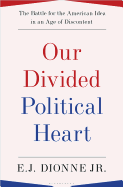
Washington Post columnist E.J. Dionne, in Our Divided Political Heart, offers a plea for thoughtful Americans to reject false choices between the individualistic and communitarian strains in our nation's history and instead restore them to their proper balance.
Whether discussing Alexander Hamilton's expansive conception of federal power, how that vision was pursued by Henry Clay and the Whig Party or the rise of the Populist and Progressive movements in the late 19th and early 20th centuries, Dionne displays an impressive familiarity with the broad sweep of American history and of the work of Gordon Wood, Richard Hofstadter and other key scholars.
What he does most effectively is challenge the Tea Party's contention that so-called strict constructionist judges can discover the intent of the Founders under the rubric of "originalism," which led to decisions like Citizens United, signaling the "collapse of any controls over the campaign finance system" and distorting the Founders' republican ideals by opening the electoral system to the "intrusion of large sums of money."
Dionne suggests we should "turn to the past for enlightenment and encouragement," but his hope ultimately is that America will return to the relative stability of the Long Consensus--a period that extended through most of the 20th century--when the country succeeded in balancing "an irrepressible and ongoing tension between two core values: our love of individualism and our love for community." It's an argument he advances with both subtlety and quiet passion, and well worth contemplating as the political debates of 2012 become ever more shrill. --Harvey Freedenberg