

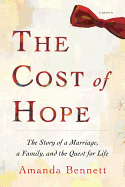
At first, The Cost of Hope seems like an economic accounting of the seven-year struggle Amanda Bennett and her husband, Terence Bryan Foley, waged to save his life after his diagnosis of kidney cancer. But the truth lies in the memoir's subtitle: "The Story of a Marriage, A Family, and the Quest for Life."
Amanda, on assignment for the Wall Street Journal, met eccentric businessman Terence in Beijing in 1983, and she relates their tumultuous courtship in hilarious detail. The story of their China years, and their joyous (but still volatile) marriage, parenthood and careers, reveals a loving and vivacious family. The revelation of Terence's cancer feels as stunning to the reader, who knows it's coming, as it must have felt to them.
Throughout his illness, Bennett diligently researched options and was a well-informed advocate. After Terence's death in 2007, she scoured her notes and records, analyzing their choices and the costs of his treatment--$618,616 in all. She doesn't regret their decisions, but she does conclude that health care in the U.S. resembles "payers and providers bargaining like car salesmen or Chinese vendors," noting puzzling discrepancies. For example, her insurance initially paid 80% of the $3,232 billed for one procedure. Later, she discovered that an uninsured patient would pay $1,657 for the same procedure--about $1,000 more than she had to contribute.
At its heart, The Cost of Hope is an homage to a man and the family who relished their life through his sickness, but Bennett leaves no doubt that the financial cost of hope, in the form of American health care, must be examined. --Cheryl Krocker McKeon, bookseller