

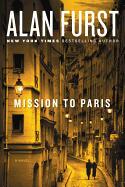
In Mission to Paris, his 12th pre-World War II novel, Alan Furst introduces us to Frederic Stahl, a Hollywood actor who's been loaned out by his studio to a production company in Paris but quickly gets caught up in much larger dramas.
Stahl arrives in September 1938, just as Chamberlain is giving Hitler Czechoslovakia. As a European emigré (né Franz Stalka of Vienna), Stahl instinctively dislikes the Nazis, and he's caught off-guard by the Reich's efforts to undermine France with a propagandistic "rapprochement" campaign, which includes touches like a bribe to a well-placed official, a wealthy advertiser complaining about the editorial politics of a leading newspaper, a postcoital suggestion to a radio commentator. The Germans want Stahl in their corner, and a conversation with an official at the U.S. embassy compels him to consider the overture. The Roosevelt administration wants to take on the Nazis, but they lack public support, so they're trying to marshal the intelligence that would convince people the war is worth fighting. "You're not a spy," the diplomatic officer concedes; but, "if, in your time here you, ah, stumble on something, something important, it wouldn't be a bad idea if you let me know about it."
As shifting circumstances converge, the story gradually locks into place. When it does, our sympathetic identification with Stahl is so thoroughly formed that it heightens the dramatic tension that much more. If you've read Furst's previous novels, you'll recognize a familiar face or two along the way. If you haven't, it won't be too long before you're searching out his backlist. --Ron Hogan, founder of Beatrice.com