

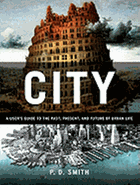
Cultural historian P.D. Smith (Doomsday Men) argues that the city is humanity's greatest creation. After reading City: A Guidebook for the Urban Age, it's easy to believe it's true.
City is not a simple chronological history of urban areas from their first appearance in ancient Mesopotamia to modern mega-cities. Instead, Smith organizes his work around elements of city life that "have become part of our urban genetic code," such as cemeteries, street protests, slums, suburbs, markets, street food or graffiti--drawing illuminating parallels and unexpected connections along the way. The chapter titled "Where to Stay," for example, begins with the growth, death and rebirth of downtown, looks at immigrant neighborhoods in 19th-century America in the context of Jewish ghettos in Europe, makes a sharp turn to slum cities in the developing world, considers the allure of garden suburbs beginning in ancient Babylon, and ends with a brief history of the hotel.
The book is punctuated by sidebars that go off at right angles to the main text. A section on commuting might branch off into a brief history of the parking meter. The range of material is breathtaking, but Smith wears his erudition lightly. The prose of City is smart and fast-paced, with a nice balance between big picture history and close-up details. The book is full of "aha" moments and occasional humor. This one's a must read for history geeks. --Pamela Toler, blogging at History in the Margins