

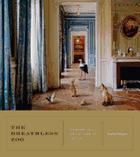
The natural progression of all living beings is toward a state of decay and decomposition. Taxidermy tries to reverse this, creating lifeless immortality out of death. Rachel Poliquin explores the human motives behind this impulse for preservation in The Breathless Zoo, drawing upon historical, philosophical and psychological sources to understand taxidermy and its role in communicating human relationships with the natural world.
Poliquin structures her discussion around seven themes, each highlighting significant historical events that drove taxidermy to its heights of popularity in the 19th century. She begins, 200 years earlier, with wonder: the human esthetic response exemplified by the early collections of animal pieces intended to "expose the inherent, chaotic, startling potential of the natural world." Later, taxidermy evolved to become a symbol of personal refinement and enlightenment, leading to an appreciation of nature's wonderful bounty: "Nature could save your soul," she writes. "Even if dead and stuffed, natural beauty was spiritually cleansing."
Improvements in the preservation and anatomical representation pushed taxidermy to new heights of spectacle, as displays came to symbolize European imperialism and conquest over nature. Ecological concerns and scientific study lie at the heart of Poliquin's ruminations on taxonomic order, and her final three sections are devoted to narrative (hunting trophies), allegory (taxidermy as animal fables) and remembrance (taxidermy as the ultimate pet memorial). It is human to attempt to circumvent the finality of death, she concludes, but "dead yet still inanimate, these animal-things offer something more than worlds alone can describe." --Nancy Powell, freelance writer