

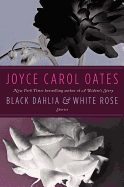
Never one to shy away from from the grisly and the disturbing, Joyce Carol Oates delves freely into both in Black Dahlia and White Rose. Oates's adeptness with narrative voice--her genius for disappearing into a character--is apparent in this short story collection, as is her sensitivity to metaphor. Many of the stories subtly interweave a surface narrative, rife with drama and incident, with an exploration of darker themes.
This is most apparent in the title story, about the horrific real-life murder of aspiring Hollywood starlet Betty Short in the 1950s. The media of the time sensationalized Short as the "Black Dahlia," a femme fatale Oates contrasts with an angelic "White Rose" persona for her (fictional) roommate Norma Jean Baker, the future Marilyn Monroe. In her depiction of the two women, Oates reinforces the stereotypes that have built up around them: Short is cold-blooded in her ambition, while abusing alcohol and engaging in petty theft; Norma Jean is hardworking, shy and kindhearted. The effect is almost that of a fairy tale where the misbehaving child gets her comeuppance--and the result is nightmarish.
Another story, "Spotted Hyenas: A Romance" is an ironically titled horror story of one housewife's darkest fantasies come to life. In "The Good Samaritan," a young woman doing a favor is following a more secret yearning in her heart--and possibly a self-destructive one. With these and the other stories in this collection, Oates dredges deep into the most unholy of her characters' desires and drives, fearless of the outcome. --Ilana Teitelbaum, book reviewer at the Huffington Post