

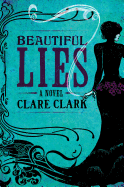
Clare Clark's Beautiful Lies was inspired by the real-life story of Gabriela Cunninghame Graham, wife of the aristocratic writer and parliamentarian Robert Cunninghame Graham, well known in the 1880s for his socialist politics. Clark sets her novel in 1887, the year of Queen Victoria's Golden Jubilee, but not everyone is celebrating--unemployment and homelessness lead to widespread riots. Parallels between 19th-century Britain and today's world are easily drawn, but never in a preachy or obvious way.
Maribel Campbell Lowe has fashioned an exotic personal history out of whole cloth. The truth is much more prosaic and, if discovered, potentially disastrous for her husband, Edward, and his family. She is already a bit of a scandal: a childless, chain-smoking photographer who does as she pleases.
In another modern touch, Beautiful Lies also outlines the beginnings of newspaper corruption and tabloid journalism, as Maribel runs afoul of Alfred Webster, a self-righteous newspaper editor who pretends to be Edward's friend but is in reality his nemesis. It is possible he knows the truth about Maribel's past and might use it against her and Edward, but Maribel is not without her resources in that department.
Edward, meanwhile, is ousted from the House of Commons for taking part in a demonstration and sent to jail. While he is serving his sentence, Maribel goes to Spain to look for a mine that will end their financial problems, another of the subplots Clark uses so well to flesh out the social landscape, mores and morals of her late 19th-century setting. --Valerie Ryan, Cannon Beach Book Company, Ore.