

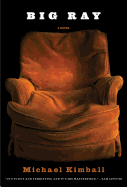
In Michael Kimball's taut Big Ray, Raymond Carrier's body, all 500 pounds of it, is found when the rent is overdue and newspapers begin to pile up on his doorstep. His son, David, and his sister must remove what's left of Big Ray's life. The apartment tells the story: stained carpet, 1950s Coca-Cola memorabilia, photographs of long-past happier times, pornography and the "smell of death," as Kimball describes, "mixed with my father's particular body odor, which was sharp and bitter but also had a faint sweetness to it."
With simple, declarative, almost diary-like paragraphs, David narrates the life of his father. Big Ray's contribution to his marriage and family life was 35 years of relentless verbal and psychological assault. His early sarcasm toward his son turned to physical violence; demand for proof of his daughter's love became sexual abuse. He grew isolated and obese, his assault turned on himself. "My father wasn't what he wanted to be," David calmly observes as he combs through his father's personal effects. "My father wasn't what I wanted him to be either."
Surpassing the simply grotesque, Kimball's story takes on something of a redemptive, Job-like intensity. Despite the unsparing picture that emerges from Big Ray's personal detritus, David can't quite shake the loss: "I still don't like my father, but I still miss him." Kimball's short, bleak novel may not tell a pretty story, but it is a well-told story that is not easy to forget. --Bruce Jacobs