

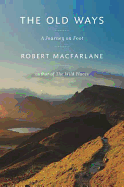
Robert Macfarlane's interest in walking goes far beyond exercise or a casual evening stroll. His lyrical account of walking ancient paths in The Old Ways stretches to encompass poetry, cartography, sailing, science, birds, beasts, mountain climbing, folklore and other topics too numerous to list--and he proves a knowledgeable and fascinating guide in every aspect.
Macfarlane traces dozens of ancient paths on land and sea, beginning in Cambridgeshire, England, but eventually stretching from the Outer Hebrides to the Himalayas. He spends a night in a haunted stone circle, crosses barbed-wire boundaries in Palestine and follows part of the Camino de Santiago in Spain. He renders each place and its inhabitants (human and otherwise) in precise, vivid detail, while exploring how outer landscapes shape our inner journeys, both as we walk a landscape and long after we have left it. For Macfarlane and the guides he meets along the way, walking becomes a way of knowing oneself, of turning inward through outward motion, a constant exchange of discovery and self-discovery.
Macfarlane idolizes the early 20th-century English walker and poet Edward Thomas, whose spirit permeates these pages but sometimes threatens to take over, especially toward the end. The greater pleasure lies in reading Macfarlane's own perspective as he explores the ways we mark our landscapes, and the ways they, in turn, mark us. --Katie Noah Gibson, blogger at Cakes, Tea and Dreams