

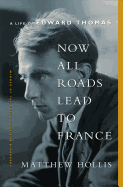
"He is the father of us all," Ted Hughes once said of the Welsh-British poet Edward Thomas (1878-1917). He's generally thought of alongside the British poets of the Great War--Brooke, Owen--but his poems were primarily about nature and the countryside. In fact, he wasn't a poet at all until he met Robert Frost. Thomas earned a basic existence for himself and his family writing reviews and prose works; then Frost arrived in England with his family in 1912 and, as he began meeting the literati, struck up a friendship, a very deep one, with Thomas. Frost read his good friend's writings and said that they could very well be turned into poems. And so, at the age of 34, with Frost's guidance and encouragement, he began to craft his first poems.
Frost, meanwhile, was writing some of his greatest poems, including "The Road Not Taken," which so inspired Thomas that he felt he had to enlist. In April 1917, at the front, a German shell exploded close to him, killing him instantly. When his first poetry collection was published after his death, it was dedicated to Frost.
Now All Roads Lead to France, a biography by the poet Matthew Hollis (Ground War), covers the last four years of Thomas's life. It is an impeccably researched and beautifully written tour de force. For those interested in the changes English poetry was going through in the late 19th and early 20th centuries, this book is a must. --Tom Lavoie, former publisher