

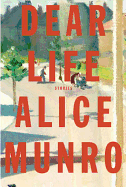
In Dear Life, each story is a flash of insight into the heart of a distinct character, grappling with the circumstances of his or her life. As in previous collections, Alice Munro's stories cover a broad stretch of time, from World War II to the 1970s and beyond.
If there is a common thread in Dear Life, it may be the theme of women struggling to determine their place in a world that has often already made the decision for them. "To Reach Japan," for example, features a female poet living in a time when a woman "having any serious idea, let alone ambition, or maybe even reading a real book, could be seen as suspect." As is common in Munro's stories, there are no conclusions reached, no voice from behind the scenes to influence the reader's opinion. This is particularly true of the twisted dance of a couple in "Corrie," where a man who has an affair with a wealthy heiress holds the power, even as she holds the purse strings. In the end, it is difficult to judge who has been wronged the most.
Perhaps the most deeply affecting of the stories is "Amundsen," another story about a malleable--though clever--girl seeking to mold herself to the desires of an authoritative male figure. The 21st-century feminist instinct is to judge, and yet Munro presents the undeniable appeal of total submission--even when it proves to be at an untenable cost.
In Dear Life, Munro once again delivers a compelling collection of stories that offer insights, delights of language and multi-dimensional female protagonists. --Ilana Teitelbaum, book reviewer at the Huffington Post