Standing alone on a bridge,
he glances over his shoulder
at footprints in the snow.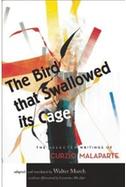 Those lines are not from the extraordinary book I'm currently reading--The Bird that Swallowed Its Cage: The Selected Writings of Curzio Malaparte, adapted and translated by Walter Murch (Counterpoint). They're from a poem I wrote a long time ago and recalled while immersed in Malaparte's words, as filtered through the perceptive lens of Murch's self-described "aerating" translations into prose and poetry.
"Lens" is an appropriate term to use here because the "footprints in the snow" image involves a seasonally appropriate literary journey back in time to a moment in 1992 when I was given a copy of Michael Ondaatje's The English Patient.
My love for that novel led me inevitably to watch Anthony Minghella's 1996 movie adaptation, which had been edited by Murch, a legendary film and sound editor whose credits include American Graffitti, The Conversation, Apocalypse Now, The Godfather and The Unbearable Lightness of Being.
In 2002, Knopf published The Conversations: Walter Murch & the Art of Editing Film, culled from a year of discussions between Ondaatje and Murch. It is a great read for film buffs, as well as one of the best works on writing and editing I've ever encountered. At one point, Murch compares the process of film adaptation to translating Malaparte, noting that "many of the decisions you make--when you go from a book to a script and then from a script to shooting and from shooting to editing--are like translating from one language to another, from the language of words to the language of images and sounds."
"The snow covering the ground nearby glowed softly in the milky daylight," Malaparte writes, through Murch's lens. Now I'm enthralled by The Bird that Swallowed Its Cage and wonder, as every reader does, where these bookish footprints will venture next? --Robert Gray, contributing editor, Shelf Awareness

