

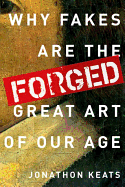
"No authentic masterpiece is as provocative as a great forgery. Forgers are the foremost artists of our age," art critic and conceptual artist Jonathon Keats writes in the fascinating Forged. "A forgery is alive with meaning."
Fakes have been around for centuries: one of the first artists to be forged was St. Luke, whose "supposed" portrait of Mary with child, the Hodegetria, was said to work miracles; even the copies of it could work miracles. It was one of Constantinople's most popular attractions until it was destroyed when the city fell to the Turks--but was it really destroyed, or could the original be one of the many "fakes" in circulation? Then there's the case of Michelangelo, who borrowed a painting by a master that he really liked--then returned a copy, keeping the original. His friend couldn't tell the difference.
Keats examines six master forgers of the 20th century. There's the German Lothar Malskat, who was asked to help restore murals damaged by war bombs. Instead, he repainted them, even creating a few new murals of his own. Eric Hebborn forged paintings and sculptures and wrote a book about it, The Art Forger's Handbook. Then there's the enigmatic Elmyr de Hory, subject of an Orson Welles's documentary, whose fake moderns were in museums around the world.
Keats concludes with a stimulating chapter about da Vinci, Warhol and "appropriation," in which legitimate artists' original creations technically come closest to forgery. Subversive indeed. --Tom Lavoie, former publisher