

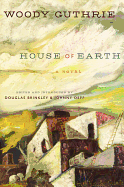
Woody Guthrie's posthumously published novel, House of Earth, is about the connection of the people to the land and the inherent injustice of private property, themes at the heart of his best known song, "This Land Is Your Land."
Tike Hamlin has never had much, but then he falls "about as low and lousy as he can get... ending up being just another [share]cropper." Worse yet, he's dragging his beloved Ella Mae with him. Together they are tethered to a hardscrabble piece of Texas land they can never own, trapped in a one-room shack that leaks flies and dust and wind. There is still love and laughter of course, but the daily grind against indignity and despair takes its toll. The one ray of light is their dream to build a house of earth.
Experiencing firsthand the devastating dust storms that ravaged the Texas plains in the 1930s, Guthrie sought a more secure shelter for the people there and found, in the ancient adobe structures of New Mexico, inspiration for a better way of life--and for his only novel. It's impossible to avoid the obvious comparison to Steinbeck's Grapes of Wrath: In theme, ethos and character, the two books are kissing cousins; in terms of style, however, they are a breed apart. Told in the unmistakable vernacular of Woody, at once earthy and erudite, House of Earth is less a novel than an extended prose poem interrupted by healthy smatterings of folksy dialogue. Tike and Ella Mae are figures torn from the pages of James Agee's Let Us Now Praise Famous Men, but rather than leaving us on the outside to stare back at his characters' stark gazes, Guthrie gains us entry into their world. --Tom Lavoie, former publisher