

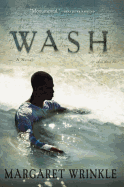
Margaret Wrinkle's debut novel, Wash, begins as an unflinching look at the particular horrors inflicted within the larger horror of slavery. But Wrinkle, a filmmaker and artist from Alabama, then delves deeper into one of America's founding sins; she plumbs beyond the brutality and into the wisdom of the ages to compose an elegiac yet surprisingly uplifting portrait of the resilience of the human spirit.
Wrinkle creates indelible characters to lead the reader into the nightmarish world of slavery. Wash (short for Washington) is too free, strong and defiant to make a good field slave, so his conflicted owner hires him out to other slave owners as a breeding slave. Pallas, a slave woman from a neighboring plantation, is given to three teenage boys for their sexual amusement. In a circular narrative voice full of the presence of nature's divinity and the cycles of life, Wash delineates the utter debasement of Wash and Pallas, but also reveals how both of them find ways to hold onto a piece of themselves that cannot be stolen or exploited.
Wash is a challenging novel that unabashedly confronts the inherent homoeroticism of a slave owner admiring his slave's prowess, as well as the other sexual undercurrents of slave society. But it also suggests sympathy for slave owners who destroyed their minds and hearts trying to live with their young country's contradictory practices of liberation and cruelty. Most of all, Wash is a solemn and magnificent paean to the survival--even amid the most crushing, inhumane conditions--of the special and eternal essence within every soul. --Cherie Ann Parker, freelance journalist and book critic