

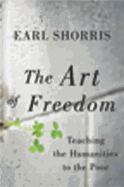
It's no secret that a person's socioeconomic status affects their education. When Earl Shorris started a humanities course at Manhattan's Roberto Clemente Family Guidance Center in 1995, college education was beyond the reach of many of its low-income clients. The Art of Freedom reveals how an idea planted by a conversation with a female maximum security prisoner evolved over 20 years into a revolutionary college-level course for the poor, imprisoned and disenfranchised with a global reach.
Throughout his life, Shorris, who died in 2012, remained devoted to the idea that what is offered at the best colleges to the students with the most advantages can also be of great use to those from more marginal backgrounds. He offers examples of the student successes and failures he's seen, in first-rate prose that possesses both a reporter's eye for telling detail and a poet's gift for the well-turned phrase. The students come marvelously alive on the page, as do Shorris's fellow educators and administrators who plan and develop the curriculum--which they pointedly never "dummy down" for the socioeconomically disadvantaged students.
Humanity shines through in his accounts of hard-bitten students gaining a deeper understanding from the great books of the Western canon--intellectual heavyweights like Petrarch, Augustine and Dante--beyond what the average college freshmen could achieve. The Art of Freedom is a fitting monument to Shorris's life and proof that a good book can be as life altering as anything in this world. --Donald Powell, freelance writer