

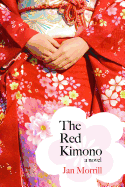
Jan Morrill's The Red Kimono tackles the fear, bitterness and broken lives that arose from the evacuation of Japanese Americans into internment camps during the World War II, drawing upon her mother's experiences to elevate history to a more intimate level. The book opens with the bombing of Pearl Harbor; living in Berkeley, the Kimuras anxiously await news from Hawaii of their eldest son, Taro. In the days that follow, Michio and Sumiko try to make life as normal as possible for their other children, 17-year-old Nobu and nine-year-old Sachiko, preaching gaman (patience) and shikata ga nai (acceptance of the current circumstances) even as their own community turns against them. A senseless act of violence sets a chain of events in motion that leads not only to the Kimura family's internment, but to the incarceration of one of Nobu's closest friends.
Morrill uses the viewpoints of three young protagonists to add depth to a period in American history that has been examined many times before; Nobu and Sachi's experiences are contrasted with that of Terrence, an African American teenager who sought retribution for his father's death at Pearl Harbor. What distinguishes The Red Kimono from other stories of the Nisei internment is its combination of raw emotional vulnerability and modern relevance. Morrill deftly exploits these dynamics--and the competing themes of race, grief, love and betrayal--in a compelling portrait of the Japanese American experience at the height of America's "Greatest Generation." --Nancy Powell, freelance writer and technical consultant