

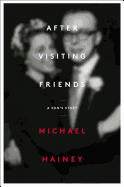
Michael Hainey's life was forever changed the morning of April 24, 1970. As he and his older brother came down for breakfast, they found their family gathered in the kitchen--except for their father. "Your dad is dead," their mother tells them.
The title After Visiting Friends refers to the public explanation for 35-year-old Robert Hainey's death in the middle of the night, in a neighborhood miles from his office at the Chicago Sun-Times, where he worked the late shift as assistant copy desk chief. "He died and we never spoke again about him," Hainey writes; any time he tried to ask his mother about what happened, he was rebuffed. When he was 18, researching a school project, he discovered that three different newspapers had three different accounts of how and where his father died. But he sat on his questions until he himself turned 35. "I cracked," he says. "My doctor called it a functioning breakdown." To come out the other side, he needed to find the truth.
Hainey's journalistic zeal in nailing down the story is only part of the story, though. It's also a tale about repairing his relationship with his older brother, trying to get his mother to open up finally and coping with the decline of his 95-year-old grandmother. Then there's the question of what he should do with the knowledge he's worked so hard to uncover.
Hainey's candor, especially about the self-doubt and frustration that accompany his quest, makes it easy for us to root for him--not just in the search for truth but in the emotional transformation that comes with it. --Ron Hogan, founder of Beatrice.com