

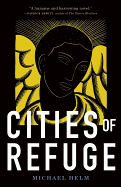
The complex plot of Michael Helm's Cities of Refuge grows out of a single event: a brutal assault on 28-year-old refugee advocate Kim Lystrander as she walks to work one night. Helm describes the attack, and the moments and days leading up to it, in riveting, almost clinical detail, but he also gives the moment heart-stopping poetic gravity. "There's a sound the earth makes in its transit," he writes as Kim lies broken, alone and un-rescued, "a streaming without music or echo, not colored or pleasing or solemn or one thing so much like another. If god speaks to us in murmurs, she heard them."
This potent tension between the rigorously specific and the lyrical is characteristic of the rest of the novel. Kim survives, but the crime has devastating repercussions. While she writes her way through her trauma by recounting the night over and over, mining her memory for clues to her attacker's identity and searching for traces of fate, her beloved mother is dying of cancer and her sometimes-estranged father, Harold, gropes for answers by launching an investigation of his own.
Harold's quest ensnares new victims of the crime, particularly Rodrigo, a young Colombian who has fled to Canada. He is being illegally harbored by Rosemary, whose clash with Harold reveals insurmountable rifts between the faithful and the cynical, the innocent and guilty and the disenfranchised and the privileged.
Helm's story has a Canadian setting but is urgently relevant to contemporary Western culture, and he tells it with an exceptional talent for detail and powerful insight. --Hannah Calkins