

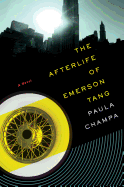
Can the engine of a car stand in as a metaphor for the immortality of the soul? That's the question at the heart of Paula Champa's debut novel, The Afterlife of Emerson Tang.
As a child, a near-death experience left Beth Corvid feeling out of synch with the rest of humanity. An archivist with a passion for cataloguing and collecting, Beth becomes the employee of wealthy Emerson Tang. But Beth's job becomes complicated when she finds out Emerson is dying.
Emerson entrusts Beth with a mission: to find the original engine of his precious Beacon racing car. In this quest, they have a rival: European artist Helene Moreau is also seeking to reunite the Beacon with its engine for mysterious reasons of her own.
Beth's search for the engine takes her from Emerson's Manhattan apartment to places as wide-ranging as Germany and California, and through research topics that include fascism during World War II and modern art movements. Emerson is a man about to lose his life far too early, while Helene is attempting to regain the vitality of her lost youth. In seeking immortality for Emerson, Beth must grapple with what it means to live a fully realized existence.
The Afterlife of Emerson Tang is cleverly written and constructed like a mind-bending puzzle. Champa's self-assured prose and character development--particularly the tormented character of Emerson--effectively move the story forward. The central conceit of the novel--the Beacon's body and engine as a metaphor for the human body and soul--is thought-provoking and integral to various plot threads. --Ilana Teitelbaum, book reviewer at the Huffington Post