

Rachel Joyce's debut novel, The Unlikely Pilgrimage of Harold Fry, tells the story of an aging man who decides to walk to the post box to send a letter to a dying friend; he passes one box, then the next, and soon finds himself walking across all of England to hand-deliver this letter to the other side of the country. Armed with little more than yachting shoes and his own determination, his walk becomes about more than just delivering a letter. As he pushes himself past his physical limits, his walk becomes a path to self-discovery, during which he comes to terms with his past and rediscovers a zest for life he thought he'd lost for good.
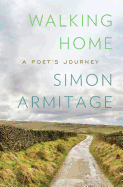 This restorative power of walking has been the subject not only of fiction, but of several memoirs. Bill Bryson's entertaining A Walk in the Woods invites readers to accompany the humorous writer as he rediscovers America by hiking the Appalachian Trail. More recently, Simon Armitage walked the 256-mile Pennine Way, bisecting England from the Midlands to the Scottish border in 19 days. He recounts his journey in his memoir Walking Home, sharing tales of his occasional companions, a litany of odd English place names and coming to a surprisingly satisfying conclusion.
Robert Macfarlane is another avid walker, though perhaps more academic in his pedestrian pursuits. In The Old Ways, he provides a lyrical account of walking ancient paths across the world, from England to the Himalayas. While Macfarlane's walks range farther than most readers' might, his meditation on walking as a way of knowing oneself will inspire even the most non-athletic among us to head out for a stroll as spring comes to town. --Kerry McHugh, blogger at Entomology of a Bookworm