

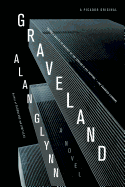
In the anti-Wall Street rhetoric of the Great Recession, angry victims hollered for the heads of the financial tycoons responsible. Alan Glynn's Graveland starts when someone attempts to collect. First an investment banker is shot in the head while jogging in Central Park, then a hedge fund mogul is gunned down outside a Columbus Avenue restaurant. Sensing a story, ambitious investigative journalist Ellen Dorsey dives into an all-night Internet swim and finds a relevant post on a radical blog called Smells Like Victory: "I'd start with someone from each of the pillars of this rotten temple... just pick three institutions and pop the top guys."
Dorsey is afraid she'll get scooped by someone online, but when the cops report no suspects, she digs further and uncovers a trail of connections that extend to a small college near Albany before circling back to Manhattan's Lower East Side. Then things get complicated.
Glynn knows New York City--both its rich and its poor--and he clearly knows how to move a plot with many moving pieces. What sets him apart, however, is a flair for snappy character descriptions, like the sidewalk socialite with "because-she's-worth-it hair and a Jell-O-on-springs gait," or the huddle of college girls who "work their phones, foreheads all screwed up in concentration, fingers hopping and dancing like they're in some demented jazz ensemble." Graveland's timely plot and diverse characters almost make the recession entertaining. --Bruce Jacobs, founding partner, Watermark Books & Cafe, Wichita, Kan.