

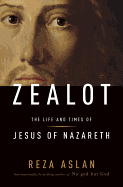
Like the rock star or the famous artist, the revolutionary leader is inevitably misconstrued after death. In Zealot, Reza Aslan makes the case that Jesus Christ was a radical revolutionary who was responding to oppressive Roman rule. Though Aslan (No god but God) is not the first to posit Christ as a political figure, his examination of the period after his crucifixion focuses on how the gospel writers strategically reconfigured Jesus's image and, in doing so, depoliticized the movement.
Using the meticulous research skills on which his reputation is built, Aslan elaborates the context of Jesus's rise to glory. While he reached prominence in life, it was not until after the crucifixion that Jesus's followers began to write the gospels and propagate their vision of him as the Messiah. "Crucifixion was a punishment that Rome reserved almost exclusively for the crime of sedition," Aslan observes, yet Jesus's followers deliberately distanced themselves from those political implications--an understandably cautious move after the failed Jewish rebellion of 66 CE. Their apolitical portrait, transforming Jesus from a "revolutionary Jewish nationalist into a peaceful spiritual leader with no interest in any earthly matter," both warded off the vengeance of the Romans and opened the possibility of converting them.
Through this detailed historical narrative, Zealot illuminates the growth of what continues to be the most widely practiced religion on Earth. --Annie Atherton